Introduction: The Heart of Japanese Relaxation
For many travelers, soaking in an Onsen (natural hot spring) is the ultimate Japanese bucket list experience. It is a place of deep relaxation, healing, and communal connection.
However, because Onsen culture is rooted in ancient traditions of purity, there are specific rules and “nuances” that can feel intimidating for first-timers. Understanding these isn’t just about following rules—it’s about showing respect for the water and the people sharing it with you.
1. The Tattoo Question: Why the Ban Exists
The most common question from international visitors is: “Can I enter an Onsen if I have tattoos?”
Historically, in Japan, tattoos were associated with the Yakuza (organized crime). Because an Onsen is a public space where everyone should feel safe and “at peace,” many facilities still have a “No Tattoo” policy to ensure that regular customers are not intimidated.
- The Reality: While modern attitudes are changing, many traditional baths still strictly enforce this.
- The Solution: If you have small tattoos, you can often cover them with waterproof bandages. For larger pieces, we highly recommend booking a private bath (Kashikiri-furo) or staying at a Ryokan that allows tattoos.
2. Entering the Water: The Art of “Kake-yu”
Before you even touch the hot spring water, there is a vital ritual of preparation called Kake-yu.
- The Ritual: Use a small bucket to pour the hot spring water over your body several times.
- The Nuance: This serves two purposes. Physically, it prepares your heart and blood pressure for the heat. Socially, it acts as a signal to the people already in the bath: “I am cleaning myself and getting ready to join you.” It’s a silent “hello” to the communal space.
3. Inside the Bath: Respecting the Water
Once you are rinsed and ready, it’s time to soak. But keep your small towel handy!
Why the Towel on the Head?
You will notice many Japanese people balancing a folded, damp towel on top of their heads.
- The Rule: You must never put your towel into the bathwater. It is considered unhygienic, as the towel was used to scrub your body.
- The Fun Part: Why the head? Aside from keeping the towel dry, many locals do it because it simply feels good! It adds to the “Onsen mood” and makes the experience feel festive and authentic.
The Washing Station Etiquette
When you sit at the washing station to scrub your body, remember to rinse your stool and bucket with the shower before you leave. Even many Japanese people forget this, but doing so shows a high level of “Omotenashi”—consideration for the next person who will sit there.
4. Leaving the Onsen: The “Dry First” Rule
The etiquette doesn’t end when you step out of the water.
Before you walk back into the changing room (Datsuijo), use your small towel to wring out as much water as possible and wipe your body down. * Why it matters: Walking into the changing area soaking wet is a safety hazard—it makes the floor slippery and increases the workload for the cleaning staff. A quick “pre-dry” with your small towel shows that you are mindful of the environment and the people around you.
Conclusion: A Shared Sanctuary
An Onsen is a shared sanctuary where everyone is equal. By observing these manners—from rinsing your stool to keeping your towel out of the water—you stop being a “tourist” and become a part of the peaceful atmosphere.
Embrace the heat, the steam, and the silence. It is one of the most uniquely Japanese ways to find “Ichigo Ichie” (a once-in-a-lifetime moment) during your travels.
Find Your Perfect Onsen Experience
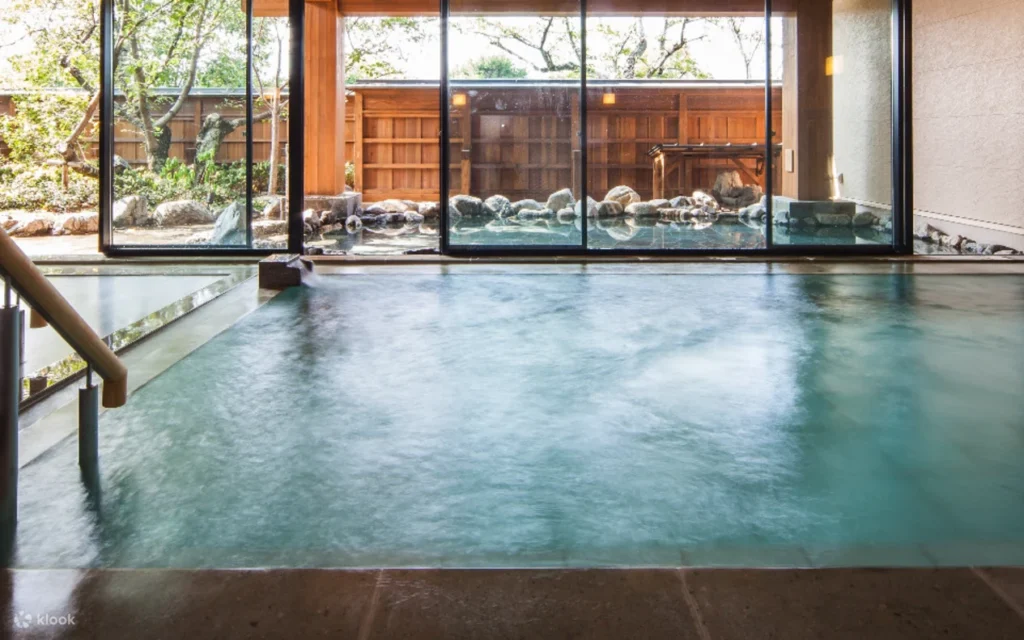
Ready to soak away your travel fatigue? Whether you are looking for a day trip to the famous hot springs of Hakone or a private “Kashikiri” bath with a view of Mount Fuji, KLOOK makes it easy to book the best Onsen experiences in Japan.
Related Reading for Your Trip
- Ryokan Etiquette Guide: The Secret Reason You Should Never Fold Your Futon
- Shrines vs. Temples: How to Cross the Boundary with Respect
- Beyond “Omakase”: Why “Reading the Air” is the Real Key to Dining in Japan
*Note: This post contains affiliate links. If you make a purchase through them, I may earn a small commission at no extra cost to you. This helps me maintain the site and continue providing “inside perspective” on Japanese culture. Thank you for your support!*