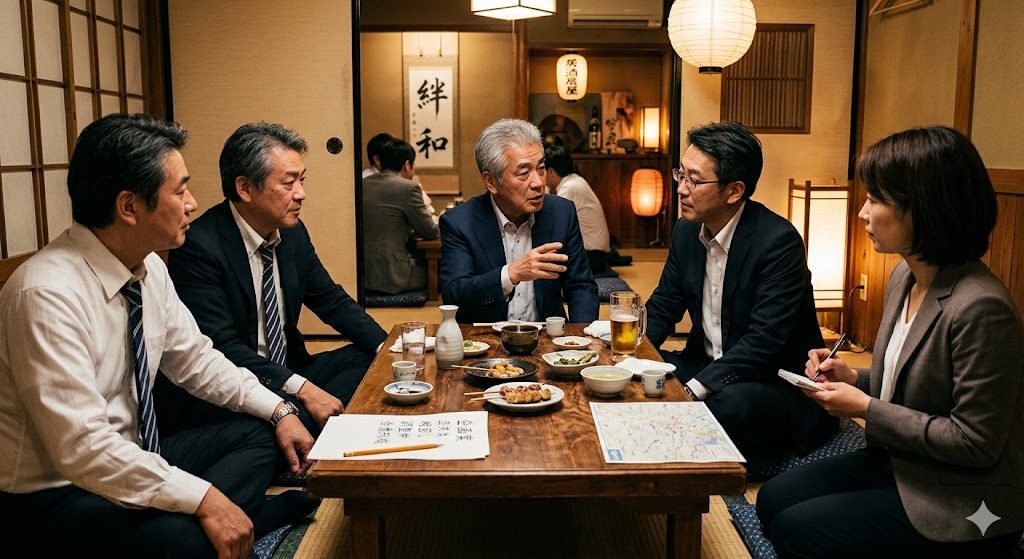
You’ve prepared the perfect slide deck. Your data is irrefutable. Your logic is sound. But when you finish your presentation in a Japanese boardroom, instead of a “Go,” you get a polite “We will consider it.”
What went wrong? In Japan, the meeting is often just a ceremony. If you are starting the debate inside the conference room, you’ve already arrived too late.
To succeed, you need to master Nemawashi (根回し)—the art of preparing the soil before planting a tree. As someone who has managed complex interests in both the manufacturing sector and university administration, I can tell you: Nemawashi is what separates the high-performers from those who stay stuck in “consideration.”
The “Hidden” Purpose of a Japanese Meeting
In many Western cultures, a meeting is a “battleground of ideas.” You bring different perspectives, debate them, and reach a conclusion.
In Japan, a meeting is a “Ceremony of Consensus.” The goal is to ensure that everyone is already on the same page before the clock starts ticking. High-performers in Japan don’t use meetings to discuss; they use them to formally approve a path that has already been cleared. This ensures that the moment the meeting ends, the team can move straight to execution without any lingering friction.
Inside Story: From the Factory Floor to the Dean’s Office
In my experience in the manufacturing industry, I saw that the most successful project managers never “surprised” anyone. If a new piece of machinery needed to be installed, the manager would visit the shop floor supervisor, the safety officer, and the finance lead individually—long before the official proposal.
They would ask: “What are your concerns? How can I adjust this to make your job easier?” By the time the formal meeting arrived, every objection had been neutralized. The meeting lasted ten minutes, and the installation started that afternoon. Later, in the university setting, I saw the same logic. Dealing with conservative departments requires a “soft touch” approach—solving problems in hallways and over quiet lunches so the official committee meeting is merely a formal “Yes.”
The Logic of Efficiency (The Nemawashi ROI)
To a Western observer, talking to five people individually before a meeting seems like a waste of time. But consider the alternative:
- Without Nemawashi: A 2-hour meeting filled with “sudden” objections, followed by three follow-up meetings to address those objections.
- With Nemawashi: 5-minute individual chats + a 15-minute formal meeting = Instant action.
Nemawashi is the ultimate “time-saver” for the smart professional.
Editor’s Note: To master Nemawashi, you need to understand the social hierarchy and communication styles of your partners. Sometimes, the best “pre-negotiation” happens over a casual activity.
[ Pocket Wi-Fi]
Staying connected and mobile is essential when you need to navigate between different offices and key stakeholders for your pre-meeting rounds.
How to Conduct Nemawashi Like a Local
If you want to move from “discussion” to “action,” follow these three steps:
- Identify the “Key Person”: It’s not always the person with the highest title. It’s the person whose opinion everyone else waits for.
- The “Consultation” Approach: Never say, “I want you to approve this.” Instead, say, “I am seeking your expertise on this draft. What do you think?” This makes them a co-creator of the idea rather than an obstacle to it.
- Solve the Conflict Privately: If someone disagrees, it is much easier for them to change their mind in a private 1-on-1 setting than in front of a group where “losing face” is a risk.
Master the Art of the “Soft Touch”
Building consensus is an art form. It requires patience, empathy, and a deep understanding of Japanese hospitality. One of the best ways to learn how Japanese people build rapport and agreement is to observe their hospitality firsthand.
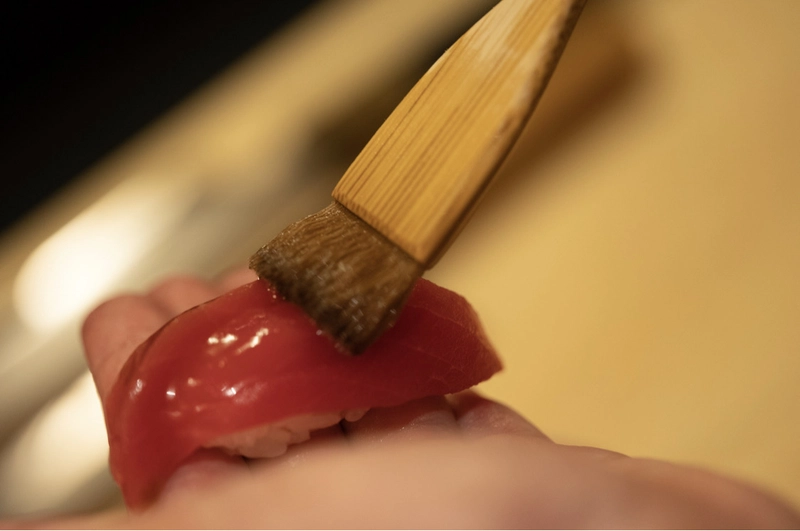
Don’t wait for the meeting to start your business. Learn the nuances of Japanese consensus-building by experiencing the culture of detail and care that defines the nation. Book an authentic experience today and start “preparing the soil” for your success.